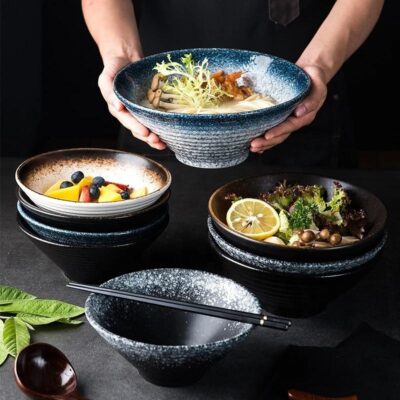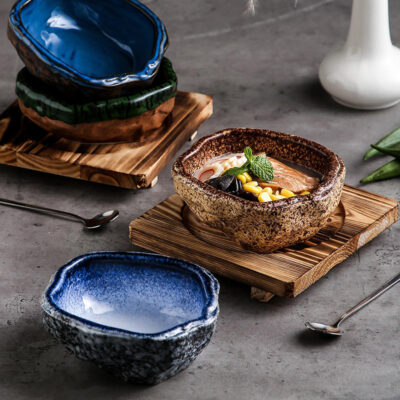


For restaurants and hospitality businesses, bowls are more than just vessels—they are tools that influence food presentation, portioning, and diner experience. The geometry of a bowl—its lip, curve, and depth—can determine whether it’s best suited for noodles, rice, or multipurpose dining. Understanding these details helps buyers make better procurement decisions and ensures that the right bowl supports both operations and customer satisfaction.
1. The Importance of Bowl Geometry
Bowls vary widely in shape and structure. Subtle design elements, such as the angle of the lip or the steepness of the curve, affect everything from how much broth fits in a ramen bowl to how easily rice portions can be scooped. Professional buyers must evaluate bowl geometry alongside material and durability when sourcing for restaurants or catering.
2. Lip Design: Holding Broth vs. Securing Grains
-
Wide outward lip: Helps keep soups and broths contained while preventing spills during service.
-
Tight inward lip: Ideal for rice, as it secures grains neatly and avoids over-spill.
-
Flat rim: Provides stability for stacking and plating, commonly used in buffet service.
3. Curve and Ergonomics
The inner curve of the bowl determines the dining experience:
-
A steep curve is perfect for noodles, allowing broth to pool and toppings to sit visibly on top.
-
A gentle curve works best for rice and side dishes, making it easier to scoop without chasing grains around.
-
Mixed-use bowls often balance the two, offering medium curves suitable for multiple cuisines.
4. Depth and Portion Control
Depth directly impacts portion size:
-
Deep bowls: Suitable for ramen, pho, and soups where broth volume matters.
-
Shallow bowls: Better for rice dishes, salads, or desserts that require surface presentation.
-
Medium depth: A versatile compromise for restaurants offering varied menus.
Matching depth to menu needs ensures consistency in portioning, which is vital for food cost management.
5. Material Pairing with Geometry
Geometry is not the only factor—material selection matters too:
-
Ceramic bowls highlight curves and lips with elegant glaze finishes, ideal for guest dining.
-
Stainless steel bowls emphasize durability and stackability, better for prep kitchens and high-turn environments.
Balancing both design and material ensures restaurants meet both aesthetic and operational goals.
6. Partnering with the Right Suppliers
Reliable suppliers provide a range of bowl geometries to suit different cuisines and service models. Many global buyers start with Ceramic Bowl Manufacturers to access high-quality designs with ergonomic curves and food-safe finishes.
For kitchens that need heavy-duty options, working with experienced Stainless Steel Bowl Manufacturers ensures access to durable bowls optimized for stacking and bulk service.
Applications Across Food Service
-
Asian restaurants: Deep, steep-curve bowls for noodles and broths.
-
Casual dining: Medium-depth bowls suitable for rice and salads.
-
Catering services: Flat-rim bowls for efficient stacking and service.
-
Hotels: Versatile bowl collections supporting multiple cuisines.
Final Thoughts
Bowl geometry—lip, curve, and depth—plays a vital role in how food is presented and consumed. Buyers must align bowl shapes with menu requirements, ensuring functionality and customer satisfaction.
By partnering with trusted manufacturers, restaurants and hospitality groups can secure bowls that combine ergonomic design with reliable durability, supporting both operational efficiency and guest experience.